
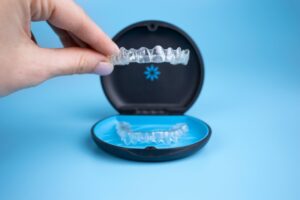
Wearing Invisalign aligners is an effective way to straighten teeth discreetly and comfortably, but sometimes patients notice that a new aligner does not fit properly. While mild tightness is completely normal when switching trays, aligners that will not fully seat or feel dramatically different may signal a problem that needs attention.
Knowing what to do can help keep your treatment on track and prevent unnecessary delays.
A Little Tightness is Normal
Each new Invisalign tray is designed to gradually move your teeth into a new position, so some pressure is expected when starting a fresh aligner set.
However, the aligner should still fit snugly over your teeth. If you notice large gaps between the aligner and teeth, difficulty snapping the tray into place, or severe discomfort, the fit may not be correct.
Common Reasons an Aligner May Not Fit
Several factors can cause Invisalign aligners to fit poorly, including:
- Not wearing aligners long enough each day.
- Switching to the next tray too early.
- Damaged or warped aligners.
- Teeth not tracking properly.
- Accidentally using the wrong tray.
Invisalign aligners generally need to be worn 20 to 22 hours daily. Inconsistent wear can allow teeth to shift back slightly, making new trays difficult to fit properly.
Try Seating the Aligner Properly
If the tray is only slightly off, try gently pressing it into place using your fingers. Many orthodontists also recommend using chewies, which are soft cushions designed to help aligners seat more fully onto the teeth.
Biting gently on chewies for several minutes throughout the day may improve the fit and encourage proper tooth movement.
Sometimes aligners need a day or two to settle comfortably into place.
Don’t Force the Tray
It may be tempting to bite the aligner into place aggressively, but forcing the tray can crack it or damage attachments bonded to your teeth.
Avoid trimming the aligner or attempting to reshape it yourself. If the tray still does not fit after careful attempts, contact your dentist or orthodontist for guidance.
Why Proper Fit is Important
Poorly fitting aligners may not move teeth correctly, potentially delaying treatment or affecting your final results. Improper tracking can sometimes lead to bite issues or uneven tooth movement if not corrected early.
Maintaining excellent oral hygiene during Invisalign treatment is also important for preventing problems like tooth decay and gum irritation around the teeth and aligners.
When to Contact Your Dentist
You should contact your provider if:
- The aligner will not fully seat after several attempts.
- You experience severe pain.
- The tray appears warped or cracked.
- Your attachments become loose.
- Large gaps remain after a few days.
Your dentist may recommend wearing your previous tray longer or ordering replacement aligners if necessary.
If your Invisalign aligner doesn’t fit, don’t panic. Mild tightness is normal, but trays that refuse to seat properly may require professional evaluation. Wearing your aligners consistently, using chewies when recommended, and contacting your provider promptly can help ensure your treatment stays on track and leads to the healthy, straight smile you’re working toward.
About the Author
Dr. Payam Ishani earned his dental degree from the University of California San Francisco School of Dentistry before completing his specialty training in orthodontics and dentofacial orthopedics at the University of Nebraska Medical Center. Through continuing education, he’s become a certified Invisalign provider. Dr. Ishani is also a member of the American Association of Orthodontists. Dr. Ishani’s expertise and training mean he’s your man if you’re looking for Invisalign treatment! Book online or call (405) 805-0997.